Wearable patient intelligence
See the change
as it unfolds.
CHIMP Patch brings physiological signals, motion and optional location into one reusable wearable system for hospital care.
Meet the patch ↘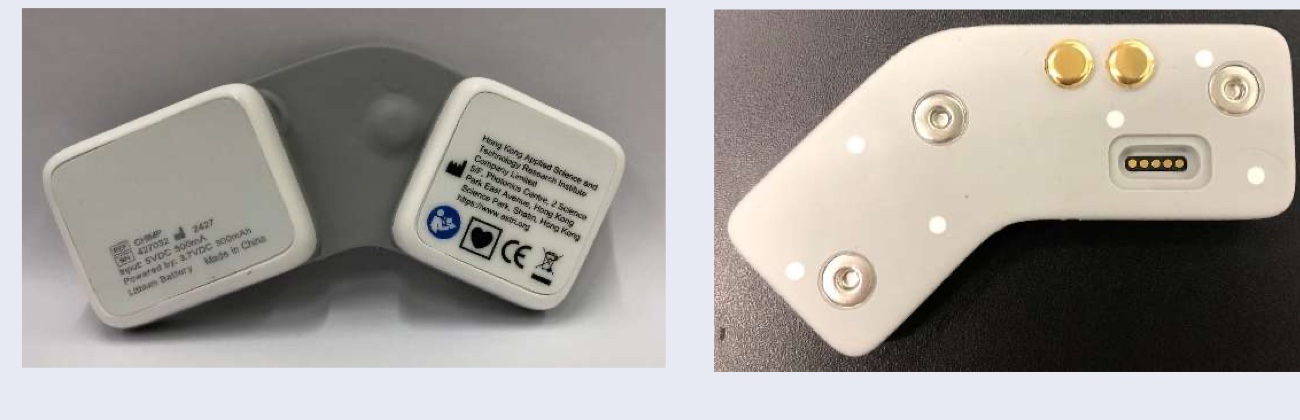
PATCH / 01
01 / The wearable
One patch.
A wider view of care.
An all-in-one, lightweight wearable with sensors for vital signs, motion and location. Built to be reused. Designed to stay close to the patient.
↓01 front /
rearreusable hardwareApproximate weight
Battery life
Low-energy transmission
02 / The signal layer
A living picture
of the patient.
CHIMP continuously gathers the signals that make a clinical situation legible, then surfaces them in the monitoring environment.
ECG / LIVE SIGNAL
03 / The alert layer
When a signal
needs attention.
Alert patterns are organised into three levels, giving clinical teams a consistent language for response.
Arrhythmia / cardiac arrest rhythm patterns
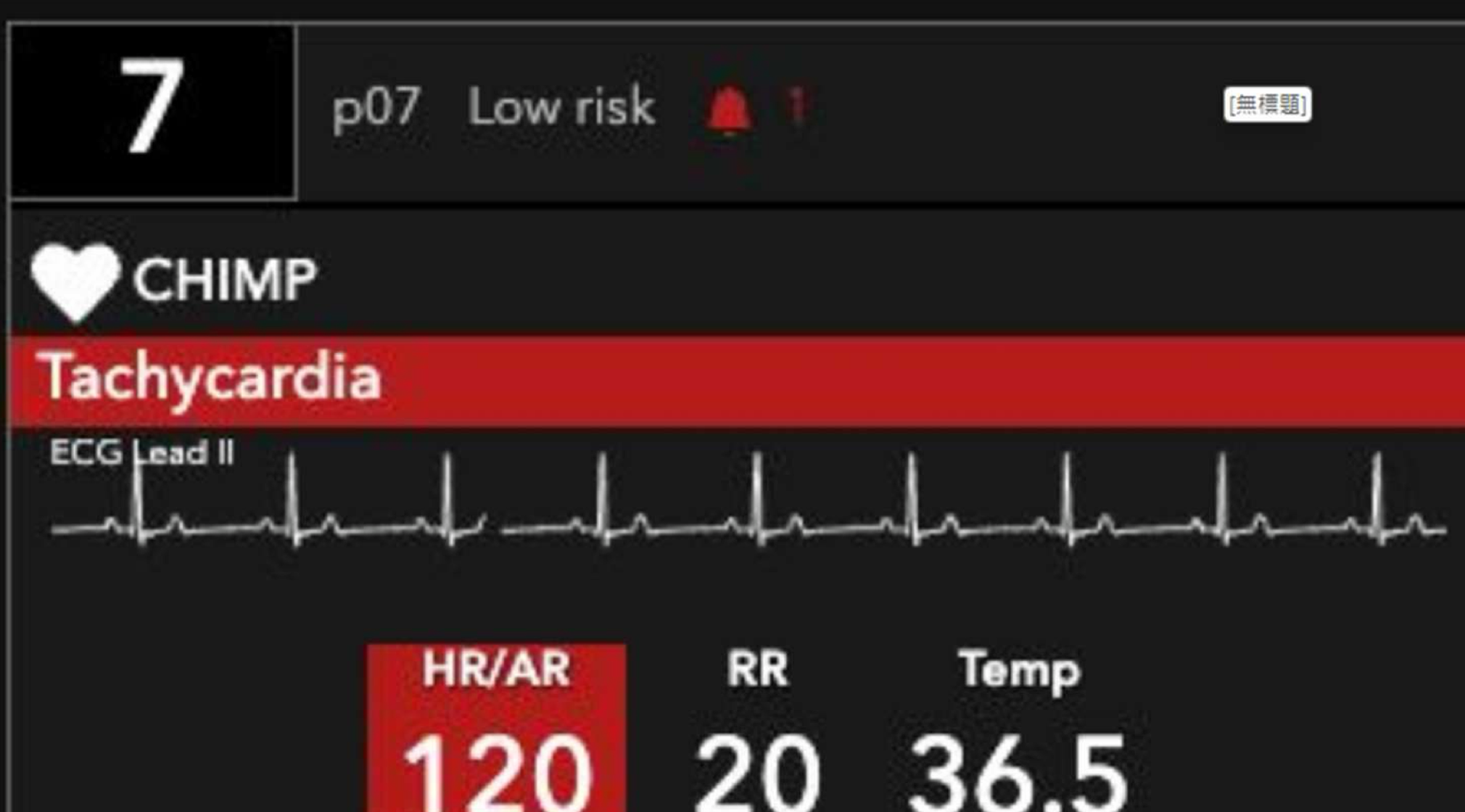
Tachycardia · bradycardia · apnea · bradypnea
Fall · out of ward · connection lost
04 / The connected view
From the body
to the bedside.
Physiological data moves through a considered system: wearable to gateway, monitoring to alert, signal to clinical response.
on patient
gateway
and alerts
awareness
05 / The clinical interface
Information,
without the noise.
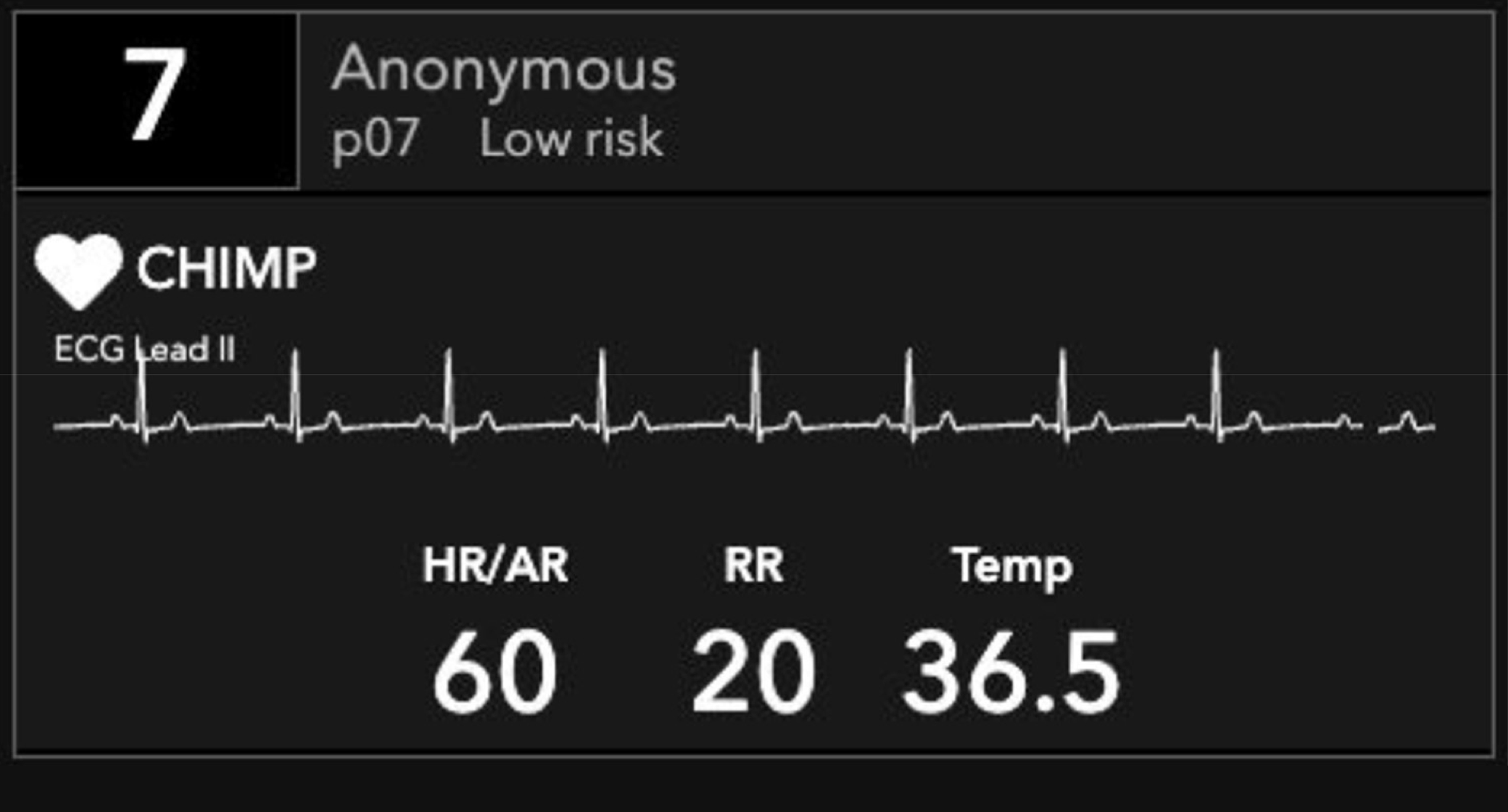
Patient Detail and Alert Notification interfaces put the live signal, its context and its urgency in one focused view.
06 / System foundation
A closed system,
carefully connected.
Source material describes deployment within HA infrastructure, with safeguards across access, transmission and processing.
07 / Clinical evidence
Tested in the
real world.
The supplied material documents a phased clinical trial at Tin Shui Wai Hospital, with doctors, ward nurses and HA Biomedical Engineering Services Section (BESS).
General ward
Regular capacity of 52 beds
Two wards
More than 1,000 patients tested
Updated till Jan 2026
Cardiac rhythm AI
Asystole, PEA, VT, VF, SVT, CHBFall detection
Geofencing accuracy
Reported performance figures from the supplied clinical-trial source material. Before real-patient trials, the system passed User Acceptance Tests.
08 / In the field
A signal that reaches
the care team.
“During a patient’s hospital stay, their condition may change. The device can notify ward nurses when heart rate changes, breathing deteriorates, a patient leaves the ward or a patient falls.”
English translation of the Chinese quotation in the supplied press material.
The press material also describes more than 100 patients identified with tachycardia or abnormal heart rhythms during the period described.